

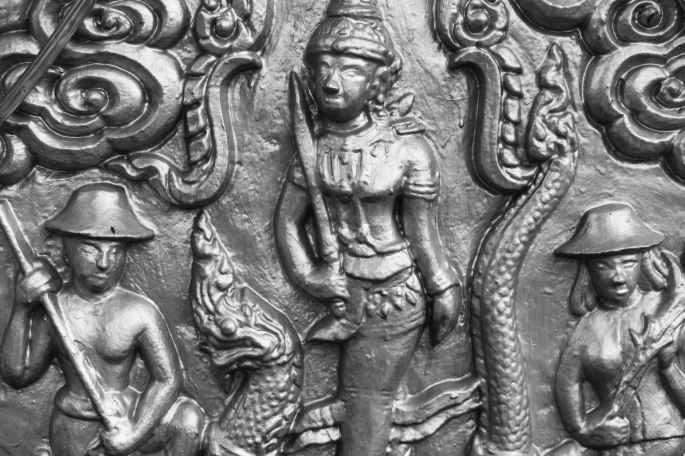
Ayurveda is an ancient healing tradition that has been passed down through generations, and at its core lies the Bṛhat Trayī – the three primary texts that form the foundation of this timeless wisdom. The Caraka Saṃhitā, Suśruta Saṃhitā, and Aṣṭāṅga Hṛdaya, collectively known as the Bṛhat Trayī, offer insights and guidance into the holistic understanding of health and wellness according to Ayurvedic principles.
Caraka Saṃhitā: Nurturing the Sūtras of Health
The Caraka Saṃhitā is one of the oldest and most revered texts of Ayurveda. It lays the foundation for Ayurvedic principles with the profound concept of Tridoṣa – the three fundamental energies that govern our physiology and psychology. According to this doctrine, Vāta, Pitta, and Kapha are the key regulators of our body’s functions. Understanding the balance and imbalance of these doshas is central to maintaining optimal health.
Delving deeper, Caraka introduces the Saptadhātu doctrine, which highlights the interconnectedness of seven tissues representing successive stages of nutrient transformation. The understanding of the Saptadhātu concept serves as a guide to comprehending the holistic nature of our bodily systems. The significance of this doctrine is in recognizing that our overall health is dependent on each of these tissues’ health and function.
Caraka’s wisdom extends to the Trimala concept, which emphasizes the importance of three waste products – Mala, Mutra, and Śeṣa – in the detoxification process. This process is a cornerstone of preventive medicine. Caraka mentions that accumulating toxins lead to disease. Therefore, it is essential to maintain a proper regular detoxification of the body.
Suśruta Saṃhitā: The Art of Healing and Surgery
The Suśruta Saṃhitā is considered the foundational text for Ayurvedic surgery and medicine. It provides a comprehensive overview of anatomy, embryology, and surgical techniques. It also showcases the advanced surgical skills possessed by Ayurvedic scholars.
The Suśruta Saṃhitā covers diverse areas such as fractures, dislocations, ophthalmology, and obstetrics. It offers practical insights into the various surgical procedures, such as rhinoplasty, cataract, and Cesarean section.
One of the most fascinating aspects of the Suśruta Saṃhitā is its innovative approach to surgery. The text describes techniques for reconstructing noses, ears, and repairing clefts. The surgical techniques mentioned in the text are remarkable, considering the period’s medical knowledge and tools.
Aṣṭāṅga Hṛdaya: The Heart of Ayurvedic Medicine
Aṣṭāṅga Hṛdaya focuses on the practical application of Ayurvedic principles. It is a compendium of knowledge from the Caraka and Suśruta Saṃhitā. The text is divided into eight sections, each covering a different aspect of Ayurvedic medicine.
The text includes comprehensive prescriptions for various diseases, disorders, and preventative measures. It also provides information on diet and lifestyle. The Aṣṭāṅga Hṛdaya describes various herbal formulations for various ailments such as digestive, respiratory, and neurological disorders.
The text emphasizes the importance of balancing the doshas to maintain health. It stresses the need to understand the individual’s constitution and adapt the treatments according to their specific requirements.
The Bṛhat Trayī – the three primary texts of Ayurvedic knowledge – offer a comprehensive understanding of health and wellness based on Ayurvedic principles. They are the foundational texts that inspire practitioners worldwide in their journey towards optimal health. The Caraka Saṃhitā provides an in-depth understanding of the doshas, the Saptadhātu concept, and the Trimala concept. The Suśruta Saṃhitā showcases the advanced surgical skills of Ayurvedic scholars, while the Aṣṭāṅga Hṛdaya focuses on the practical application of Ayurvedic principles. Together, these texts form the core of Ayurvedic knowledge, and their continued study and practice impact modern medicine in remarkable ways.

 Dr. Sugesh